Thursday, January 27, 2011

How To Store Veggies!!

If you're like me, you go to the store and buy lots of fresh veggies and fruits at one time... and then can't gobble them up fast enough before they go bad! If only we all lived within a few blocks of a supermarket, so we could stop by every couple of days after work to pick up fresh stuff for dinner! Unfortunately, this is a dream for most of us, and the reality is that we must make fewer trips to the store and buy in mass quantities.

I've been getting a lot better at eating all my produce before it takes a trip to the compost, but here are some tips for storing your veggies properly to keep them as fresh as possible.

1. Carrots: Best within a couple of weeks. Wrap in paper towels or perforated plastic bag.
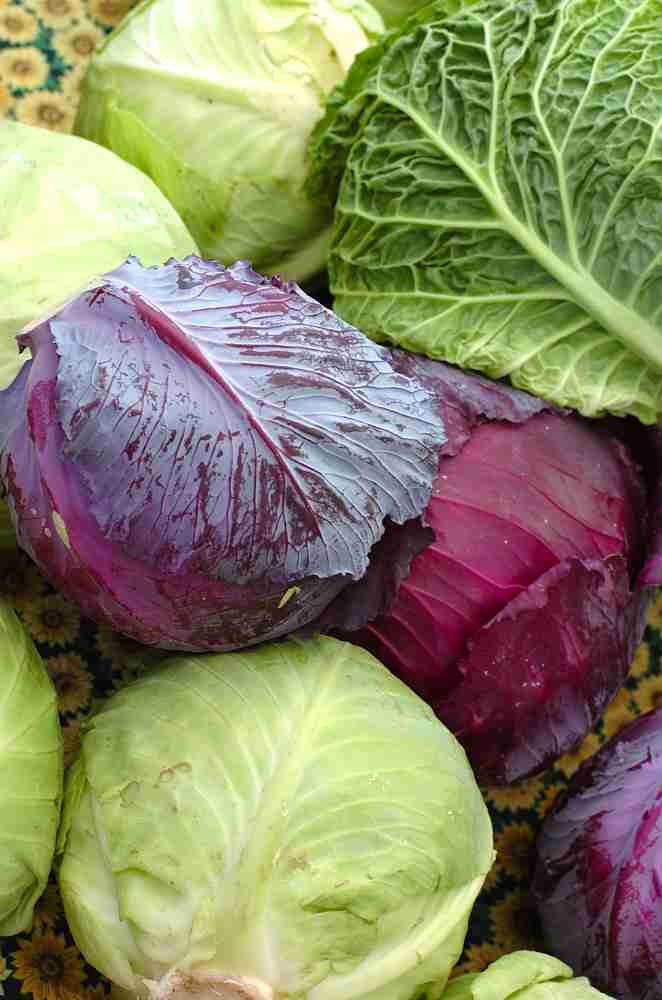
2. Cabbage: Best within a week. Store in the crisper in a perforated plastic bag. **Do not wash prior to storage as this speeds up deterioration.
3. Greens: Kale, chard, spinach, collards... best to eat within 3-4 days. Store unwashed and wrapped in damp paper towels and a perforated plastic bag.
4. Lettuce: Best within a week. Store unwashed in a perforated or loose plastic bag.


Another tip to use your produce while its fresh: cook in bulk!!! Make large quantities of a dish and freeze the leftovers. Then, when you haven't been to the store in a while and are scrounging for something to eat, just take your leftovers out of the freezer, thaw and reheat, and BOOM: a hearty dinner with minimal effort.

Good luck, produce lovers.

Another thing I recently found was a website that delivers fresh organic produce to your door weekly, bi-weekly, or monthly in Michigan for cheap. If you're interested, check it out:

http://michigan.doortodoororganics.com/

Tuesday, January 25, 2011

May the Oats be with you.

My life has been given a new meaning as of 11am.

I've never before dressed my oatmeal in anything except brown sugar, milk, and fruits of the dried variety, UNTIL TODAY.

The lovely Neeshan Mehretu and I got together to discuss our upcoming plans for a workshop at the Growing Our Food Systems Conference next month, and she greeted me with a bowl of freshly prepared steel cut oats doused generously in olive oil and a spoonful of an Ethiopian spice called Berbere: a mixture of cayenne pepper, garlic, ginger, onion powder, paprika, and a little sea salt. Oh, mah, gah. So good.

So finally, after decades of eating sweet oatmeal, my palate has been introduced to spicy, savory oatmeal. For all you avid oatmeal eaters out there, I IMPLORE you to try this: cook your oats with a little water like you usually do, and then mix some olive oil into it and sprinkle with whatever spices suit your fancy. Cayenne, paprika, cumin, garlic/onion powder, pepper, salt, basil, thyme? Yum, yum, yum.

Mmmm. Oats.

Wednesday, January 19, 2011

Broccoli and Cauliflower Soup

My kitchen has a food processor now and I've been meaning to use it! Tonight is the night (when two become one...) That is, when two vegetables become one. Particularly broccoli and cauliflower.

Broccoli and Cauliflower Soup

Ingredients:
4 cups veggie, chicken, or turkey broth
3 cups broccoli florets
3 cups cauliflower florets
1/2 (or a whole if you're feeling zealous) red or white onion, chopped
1 small diced potato
1/2 cup or 4 oz. cheddar cheese (or any cheese!)
1/2 cup milk
salt and pepper to taste

Directions:
Bring broth, broccoli, cauliflower, onion and potato to a boil in a large saucepan. Reduce heat, cover, and cook for another 10 minutes. Remove some, most, or all of the broccoli/cauliflower pieces, (depending on how smooth you want your soup) and 1 cup of broth. Keep cooking the rest of the soup for another 10 minutes. Put cheese, milk, broccoli/cauliflower pieces, and 1 cup of broth into the blender or food processor. Puree until smooth. Mix this back into the large saucepan with remaining soup. Heat thoroughly, but do not boil or cheese will curdle. Add salt and pepper to taste.

I think I'll keep mine a little chunky by leaving some broccoli/cauliflower out of the food processor.

Monday, January 17, 2011

Garlic, revisited

This website was recently brought to my attention: http://www.samplestuff.com/

It's dedicated to all things related to SAVING MONEY, whether it's getting free samples, tips on making your food last, tips on saving money on groceries, easy cheap recipes, couponing 101, ideas for saving extra cash, etc etc. CHECK IT OUT. We could all use some extra cash!

Samplestuff.com has informed me that garlic is not used just for adding to every single food and meal of every day to make taste delicious (wait... is that just me?), BUT can also be used for treating ear infections and general cold symptoms.

For ear infection:
Crush 1 clove of garlic in 1 tablespoon of WARM olive oil (not hot!) and let stand for 5 minutes. Strain out the garlic, let the remaining oil cool, and put 2 drops of the oil in each ear, 3 times a day, for 3 days.

For sore throat:
Press or mince 1 clove of garlic and cover it with some honey (this will lessen the strong garlic taste). Swallow it all like a pill. Take this "pill" with some other food or water, as lots of garlic can be harsh on an empty stomach.

For other garlic tips, here's the website: http://www.samplestuff.com/?p=4605&utm_source=feedburner&utm_medium=email&utm_campaign=Feed%3A+FreeFreebie+(Sample+Stuff.com)

Friday, January 14, 2011

"Health Foods"

I'd like to briefly share my opinion on foods that are generally acknowledged to be "healthy". Their labels advertise "a full serving of veggies" and "your daily amount of omega-3s" and "fat-free" and "reduced sodium", but WHAT ELSE is in these foods? A package of SunChips says "18g of WHOLE GRAINS per serving" with a big red  heart around it, but if  you turn the bag around and look at the ingredient list, you'll find quite a lengthy list with many unpronouceable words. Light and Fit yogurt has "0% fat and 80 calories", and also has food starch, aspartame (artificial sweetener) and food color additives. Yummy?


My advice is to go right to the ingredient list when deciding which foods to buy. Generally, if there are more than 5-8 ingredients, be cautious. If there are more than 2 ingredients that don't sound like real food, or that you can't pronounce, be cautious. It is easy to get sucked into buying foods with health claims on the labels, but be aware that food companies do this on purpose! They might not be lying about the "29% daily value of fiber per serving" on the front of the box, but they're also not putting "Good source of sugar and High Fructose Corn Syrup" or "Mmmm, lots of malt flavoring in every bowl!" in big flashy letters, either.


Check out this article for more info.
http://www.huffingtonpost.com/the-sweet-beet/health-foods-that-arent-healthy_b_806295.html#s221251&title=Raisin_Bran

I promise I'll get back into recipes next week :)

Thursday, January 13, 2011

Two Posts in One Day?

I just found this article in the Huffington Post. Totally appalled. Please read!

http://www.huffingtonpost.com/dr-mercola/whats-infast-food_b_805190.html?utm_source=DailyBrief&utm_campaign=011311&utm_medium=email&utm_content=BlogEntry&utm_term=Daily+Brief

Still Tasty

http://www.stilltasty.com/

Check out this website. It has ALL you need to know about the shelf life of any food and helpful hints for keeping food fresher and longer. I loved this:

10 Surprising Foods You Can Freeze

You already know that the freezer is a good place to stow steak and chicken. But it works equally well for some far less obvious items.
 
Try freezing the following (you’ll find more detailed instructions by clicking on each item). You'll save money, waste less — and make cooking a lot more convenient.
 
•       OPENED WINE: 6 months
Can't finish the whole bottle? Freeze leftover wine in ice cube trays and transfer to freezer bags. Great for cooking, in sauces, stews and the like.
 
•       EGGS: 1 year
Crack open and mix in a touch of salt (if using for savory dishes) or sugar (for baking or desserts); place in freezer bags or airtight containers.
 
•       BROWN RICE (UNCOOKED): 1 year
Brown rice has a higher oil content than white rice, so its shelf life isn’t nearly as long. But it’ll keep for several months longer if you freeze it.
 
•       BUTTER: 6 months
Butter freezes well, so stash a stick or two in the freezer (leave in the original wrapping and place in a freezer bag) and you’ll always have some on hand when you need it.
 
•       MILK: 3 months
If you’re constantly running out, freeze a backup supply in an airtight container. Thaw in the fridge and stir well before using — the texture may be a little grainy, but it's fine for cooking and usually okay for drinking.
 
•       NUTS - INCLUDING  PECANS, ALMONDS, WALNUTS: 1 -2 years (depending on the type)
Thanks to their high oil content, nuts are especially prone to going rancid. Freeze them and they’ll stay fresher longer.
 
•       FRESH HERBS - INCLUDING BASIL, CILANTRO, PARSLEY: 6 months
Most recipes call for only a sprig of herbs, but you have to buy the whole bunch. Freeze what you don’t use in ice cube trays, covered with a bit of water, and then transfer to freezer bags.
 
•       TOMATO PASTE: 3 months
Rarely do you need to use the whole can at once. Freeze dollops of leftover tomato paste on a cookie sheet or in ice cube trays and transfer to freezer bags for use in future recipes.
 
•       BREAD: 3 months
If you can never seem to finish a whole loaf before it gets rock-hard or moldy, freeze it. Bread toasts just fine, straight out of the freezer.
 
•       MAPLE SYRUP (100% PURE): keeps indefinitely
Sure, it’s more expensive than the imitation stuff. But pure maple syrup keeps forever in the freezer — so you’ll never have to waste a delicious drop.